
Choosing between aircraft leasing vs purchase is one of the most strategic financial decisions for companies operating executive aircraft in Brazil. There is no universal...


Brazil Surpasses 11,000 Executive Aircraft: What This Expansion Means for Those Who Matter
16/09/2026
| AircraftIn 2026, Brazil consolidated a milestone that repositions the country on the global business aviation radar, reaching a business aviation fleet of 11,355 units as of April 2026 — a 4.8% increase compared to the same period in 2025, according to data released by ANAC (RAB) – April/2026. The result confirms the country as the second-largest executive aviation market in the world, behind only the United States.
For those who pilot, operate, or lead executive aviation companies, this number is more than a headline statistic — it is a direct indicator of pressure on financing, delivery timelines, and import structuring. In this article, we look at what this record means from the perspective of trading operations, without getting into the technical side of aircraft certification.
The Numbers Behind the Record
Growth in Brazil’s fleet is not uniform across segments, as shown by the breakdown by aircraft type and model:
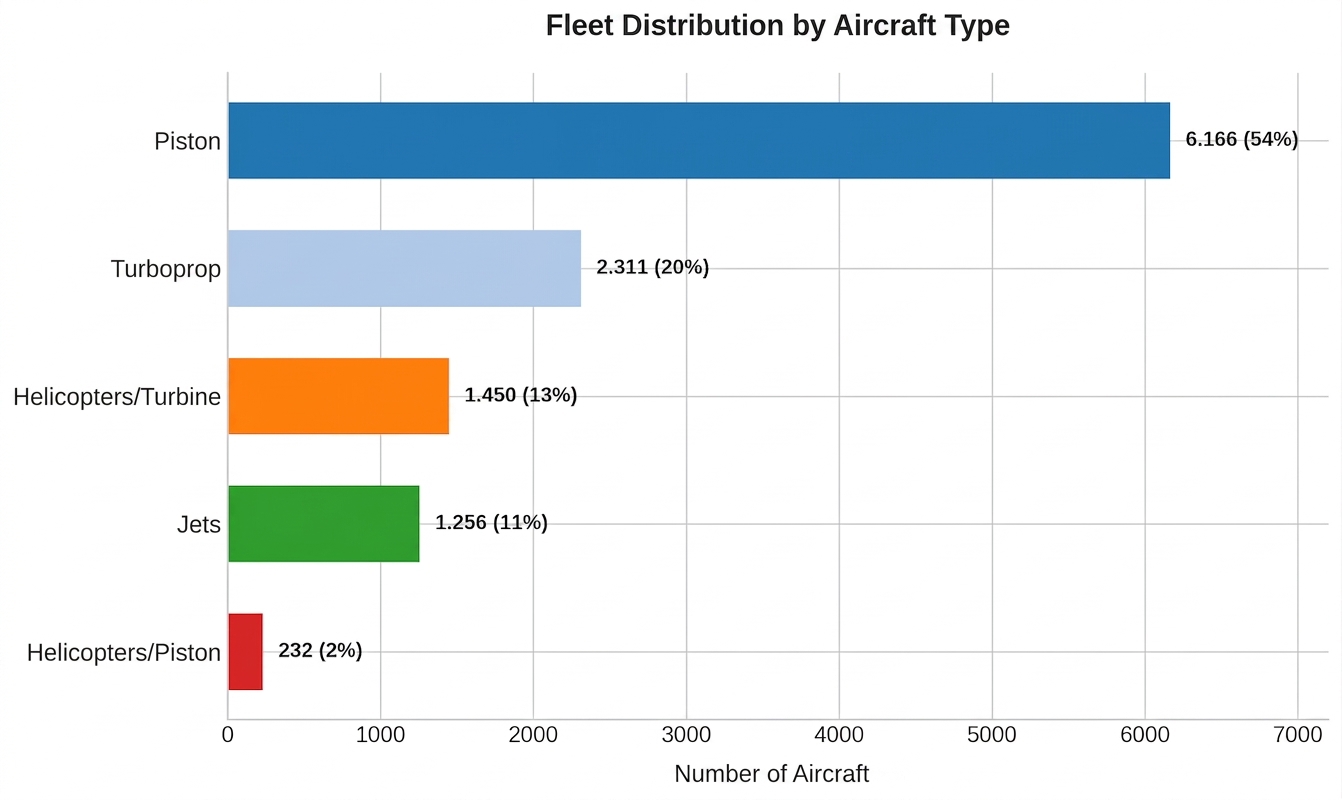
This pace of growth has an immediate practical effect: delivery times for new aircraft currently range from 9 months to 3 years, with demand outpacing the supply available from manufacturers. For those planning an import, this changes the logic of operational timing — decisions need to be made further in advance, and financial and foreign exchange planning now has to compete with a real waiting line.
Why Brazil Became the World’s Second-Largest Market
Brazilian executive aviation is also sustained by the expansion of agribusiness in the Center-West, North, and Northeast regions, by the evolution of fractional ownership and professional fleet management models, and by the growth of air taxi services, which lower the barrier to entry for business owners who need frequent mobility without maintaining their own fleet structure.
There is also a structural factor: Brazil’s executive air network connects more than 5,500 municipalities, compared to around 147 served by regular commercial aviation. This difference in reach is, in practice, what explains why sectors such as agribusiness, industry, logistics, and services increasingly depend on owned or shared aircraft to operate in regions outside the major capital hubs.
What This Expansion Means for Importers
A market expanding at a record pace changes the rules of the game for those structuring an import — and the effects show up on at least three fronts.
Financing
With more operations competing for capital, and more banks and international institutions competing for this market, financing structures for imports have gained more options — but also more analytical complexity. Comparing terms, reference currencies, and collateral structures across different institutions has become a central part of operational planning, not an afterthought.
Timelines
With manufacturer delivery queues of up to two years, import timing is no longer just a logistics question — it has become a strategic variable. Those who only begin structuring the trading operation — from negotiation through customs clearance — after closing the aircraft purchase lose time that, in a hot market, can mean additional months of waiting or higher costs.
Customs Complexity
Higher import volumes also mean more regulatory attention and more competition for analysis capacity within the agencies involved in the customs process. This reinforces the importance of a well-structured operation from the start — with all documentation, tax classification, and foreign exchange compliance organized in a way that avoids delays which, in a high-demand scenario, cost even more.
The Role of a Specialized Trading Company
In this heated market environment, the trading structure is no longer just a bureaucratic facilitator — it becomes a real competitive factor: those who can structure the import with more predictability — in financing, timelines, and compliance — have an advantage over those who handle the operation in an improvised way. For pilots, business owners, and operations teams dealing directly with the pressure of this growth, working with a trading company specialized in executive aviation is what ensures the sector’s record translates into opportunity rather than a bottleneck.
Talk to Savixx
If your operation’s next aircraft is on the radar, now is the time to structure the import — before the hot market’s timelines become a problem. Talk to the Savixx Trading team and plan your next import with a partner that understands executive aviation and foreign trade.
Related


Savixx confirms attendance at LABACE 2026 and addresses executive aircraft market trends
Latin America’s business aviation sector is mobilizing its key leaders for the region’s largest event in the category. Savixx, recognized as the reference trading company...

Savixx Trading Publishes 2025 Sustainability and ESG Practices Report
Savixx Trading has just published its 2025 Sustainability and ESG Practices Report, a document that brings together the company’s key indicators and initiatives across governance,...